
Resources & Economy3 min read
Beginner's Guide to Gathering and Spending Resources
Food, Wood, Stone, and Gold fund everything you'll ever do — and later ages add Oil, Energy, and Rare Crystals. How the economy works, and how to stop leaking it.
Applies to: version 1.0. Details may change in updates.
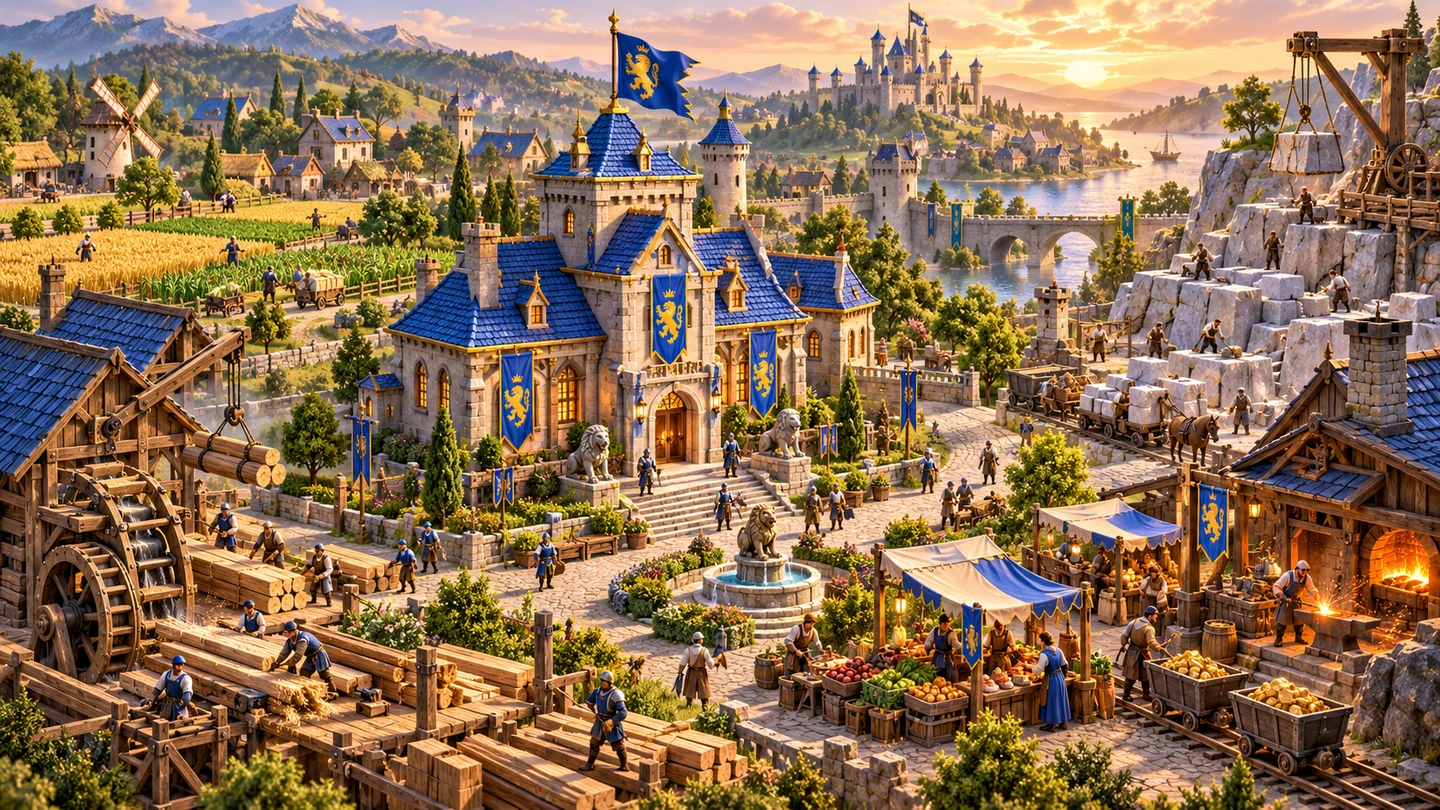
Every army in Empire Command AR is an economy wearing armor. Understanding the resource game — what each resource is for, where it comes from, and how spending decisions trade against each other — is the foundation everything else stands on.
The core four
Food fuels units and growth. It flows from farms and wild sources, and it’s the resource you’ll never stop needing — every villager and most early units want it.
Wood is the early game’s construction backbone. Buildings, early military, expansion — Wood pays for the physical empire, which makes your woodlines a favorite raid target.
Stone builds permanence: walls, towers, castles. When you see a Stone-heavy stockpile, you’re looking at a player planning to hold ground.
Gold funds quality — advanced units, upgrades, and the technologies that separate mature armies from mobs. Early on it’s a trickle you barely notice; by the Castle Age it’s the constraint you plan around.
The later three
As your empire industrializes, the resource game deepens:
- Oil becomes important with the Industrial era, funding the machines that redefine warfare.
- Energy matters in the Futuristic era, when your most advanced forces depend on the grid that powers them.
- Rare Crystals support special high-value systems — scarce by design, spent on things that change games.
The pattern: each new resource is a new thing to secure, and a new thing to deny an opponent. The empire that controls the map’s Oil enters the Modern Age on its own terms.
Where beginners leak
Resource problems are rarely about gathering too slowly. They’re about leaks:
Idle villagers. The silent killer. A worker standing around is compound interest you’re not collecting. Any time you don’t know what to do next, check for idle workers — it’s never wrong.
Stockpiling. Unspent resources are potential sitting in a warehouse. If your stockpile keeps growing, you’re under-producing units, under-teching, or overdue to advance your age. Big banks are only correct right before big purchases.
Overbuilding one thing. Production buildings you can’t afford to use, walls no one will attack, an army bigger than your economy sustains — all versions of the same mistake: spending that doesn’t match a plan.
Ignoring opportunity cost. Every purchase is also the thing you didn’t buy. The question isn’t “is a castle good?” — it’s “is a castle better than the army, upgrades, or age advancement this Stone and Gold could otherwise be?”
Spending for growth versus survival
The economy game’s central tension: resources spent on economy make more resources; resources spent on military protect the resources you have. Neither is safe by default.
The practical compass: spend for growth when you have information saying you can, and for survival when you don’t. A scouted opponent who’s teching greedily is permission to greed back — or to punish. An unscouted map is a reason to keep a defensive floor under everything you do.
Preparing for an age advance
Advancing an age is the biggest purchase you’ll make, repeatedly. Treat it like one: bank toward it deliberately, keep enough military to survive the transition window, and know what you’re advancing for — the unit, building, or capability that justifies the cost. Advancing because the button lit up is how empires arrive in the next era poor.
The resources overview covers each resource’s strategic role in more detail.